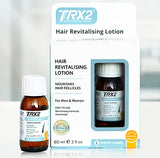
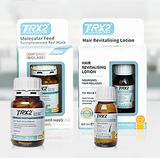
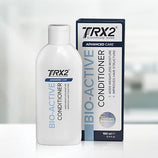
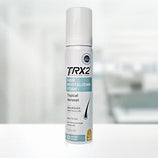
Oxford Biolabs is committed to employing safe and efficient therapies for the management of hair loss, particularly when caused by Androgenetic Alopecia. The research is ongoing to continuously improve and update the current TRX2® formula as well as create supporting products to further improve the effectiveness of TRX2®...
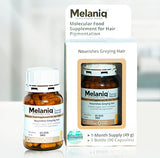
Hair colour is not only a critical element of appearance, but also an indicator of personal health status and psychological harmony. Not surprisingly, the appearance of grey hair and the phenomenon of salt and pepper hair are usually associated with ageing, so it is our primary concern to ensure that something can be done...
Oxford Biolabs’ mission to develop therapies promoting well-being extends into the field of youthful ageing. We are exploring natural, low-risk strategies to trigger a slowdown of ageing, and reverse age-associated cell damage...
At Oxford Biolabs, we value and analyze every single review and opinion about our products and services. Our customer's feedback is a powerful source for our improvement and advance
Oxford Biolabs and hair care professionals aspire to reach one aim together - to enhance our customers' quality of lives and give more confidence. We are thrilled to be acknowledged and respected by some of the best professionals in the industry
The Oxford Biolabs® team has experience in product development, a potent scientific background, and the capabilities of providing customers with real value.
When we at Oxford Biolabs develop our products, we utilise our comprehensive knowledge of skin and hair physiology. This enables us to develop world-class products that foster the well-being of our customers. To prove the efficacy of our products we conduct our own research. We additionally demonstrate the superior quality of our products by testing them jointly with third-party laboratories, as we show here.
...continue reading
Scientists have demonstrated that as people experience hair loss the function of potassium channels within hair follicles diminishes. By restoring the functionality of potassium ion channels that have broken down over time, our proprietary TRX2® formula helps to maintain normal, healthy hair on a molecular level.*
...continue reading
Biotin is beneficial for beautiful hair, skin, and nails, but is it enough to help with hair growth? It is well-known that Biotin deficiency can lead to brittle nails, hair loss, and even seborrheic dermatitis. Although considered rare, Biotin deficiency may actually be much more common that once thought. Studies have demonstrated that almost 40% of women complaining of hair loss were Biotin deficient.
...continue reading
5α-Reductase inhibitors have helped lots of men suffering from hair loss and thinning, but in recent years they have come under harsh criticism and a large number of lawsuits have ensued. Recently there has been increasing evidence that 5α-Reductase inhibitors cause impotence and mental confusion.
...continue reading
About 60% of hair loss sufferers would rather have more hair than money or friends. This goes to show that identifying deficiencies is unavoidable when seeking a complex hair loss regimen. Only by getting the right balance of nutrients, knowing what vitamins are good for healthy locks, and implementing lifestyle changes, can one attain hair goals and improve self-confidence.
...continue reading
Oxford Biolabs® has developed the TRX2® hair regimen by utilising world-leading, Oxford-based research and an in-depth understanding of the science of hair loss. Developed in Oxford, UK and manufactured in Germany, TRX2® provides a safe, naturally-based support regimen for hair that encapsulates the foremost scientific knowledge of molecular mechanisms of hair thinning and loss.
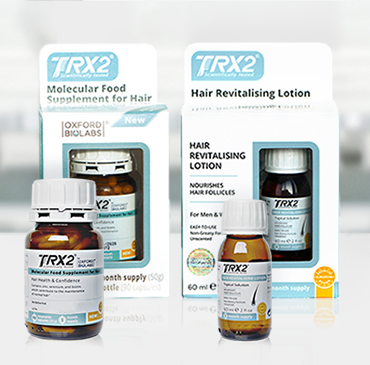
The TRX2® formula includes vital nutrients that nourish hair at a molecular level. By understanding the role potassium channels play in the growth of hair and sourcing the highest quality ingredients, Oxford Biolabs® has been able to offer an innovative, drug-free supplement that works by facilitating the transport of nutrients into the hair follicle. The TRX2® formula for hair loss and thinning hair is available in the form of a capsule and a topical lotion. Since 2010, TRX2® has helped more than 20,000 men and women in over 110 countries love their hair again
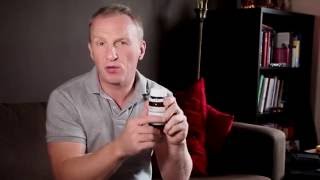
Watch the interview with Dr. Thomas Whitfield, DPhil
Founder of Oxford Biolabs and Hair Loss Expert discusses TRX2’s innovative approach and formula
THE TREATMENT. FINALLY ARRIVED.
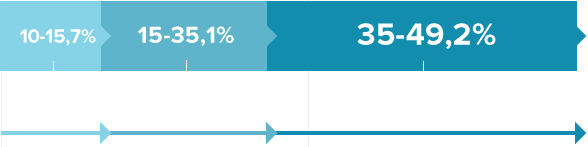
87% OF MEN AND WOMEN REPORTED SIGNIFICANT
IMPROVEMENT after using TRX2®
For men and women experiencing hair loss and those looking to prevent hair from thinning before it starts.
Maintenance of normal, healthy hair, including in the frontal and temple areas*
Visibly stronger & thicker hair*
For further details of this study, please click here
Treatment
Prevention
Men
Women
Oxford-Rooted Science
Backed by World-Class R&D
Clinically tested in multiple studies
Accredited by independent German Research Institute Dermatest®
Sold in more than 110 countries
100% naturally-based, risk & side-effect free
Developed in Oxford, UK
Manufactured in Germany
TRX2® Hair Growth Complex
Potassium, BCAA, Nicotinic Acid
This is the first supplement to contain Potassium, Carnipure® (L-carnitine- L-tartrate), branched-chain amino acids (BCAA) and Nicotinic Acid delivered via a proprietary potassium channel-stimulating complex. It increases blood and nutrient flow within hair follicles, improves the barrier properties of the scalp, stimulates hair protein synthesis and provides hair follicles with the specific compounds needed to maintain normal healthy hair.
CARNIPURE® Tartrate
TRX2®’s proprietary potassium channel-stimulating complex features Carnipure® tartrate. Sourced in Switzerland, Carnipure® tartrate is a patented, special grade of L-carnitine-L-tartrate. Together with TRX2®’s other compounds it helps trigger potassium channel activity and increase the flow of nutrients into the hair follicle.
Potassium channels are small pore-forming protein structures that control the transport of nutrients across the hair follicle’s cell membrane. As people experience hair loss, the activity of the potassium channels diminishes. The effect is an impaired membrane potential and the interrupted transport of nutrients into the hair — resulting in shrinking follicles and thinning hair.
The TRX2® Product Range by Oxford Biolabs is developed to stimulate potassium channels within the hair follicles both internally and externally by providing them with the specific powerful compounds needed to promote healthy, natural hair.
To learn more about how these tiny protein structures relate to hair loss visit our
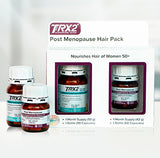
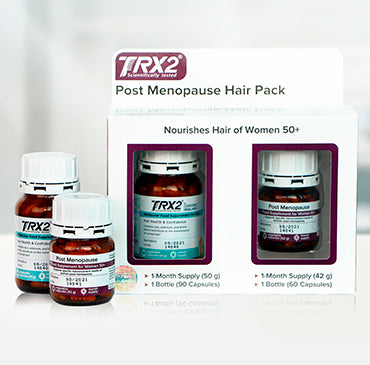
TRX2® Post Menopause Hair Pack is a combination of TRX2® Molecular Food Supplement for Hair and the specifically formulated Post Menopause Food Supplement for Women 50+. Based on natural ingredients these supplements complement each other to address female pattern hair loss in women after menopause. Regularly taking the food supplements from this pack provides women with a solution that nourishes mature female hair.
Check out our new supplement for mature female hair
TRX2® Post Menopause for Women 50+
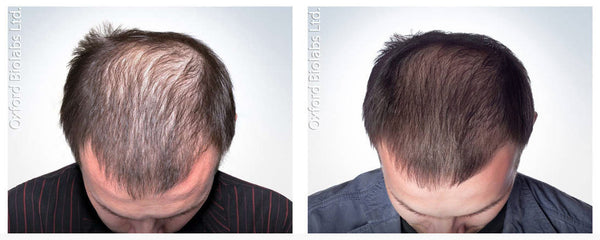
CASE STUDIES
We have formed partnerships with world-class research institutes in order to complement our own in-house studies and to establish independent, third-party proof of the efficacy of our products.
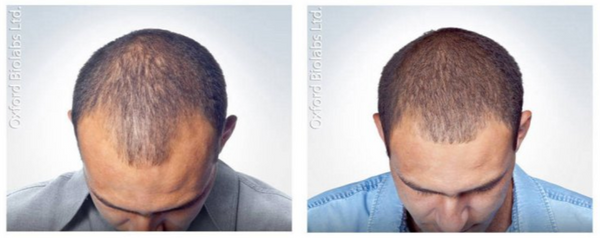
Case 1
Subject: Male, 34 years old
NW 3 - Diffuse Hair Thinning
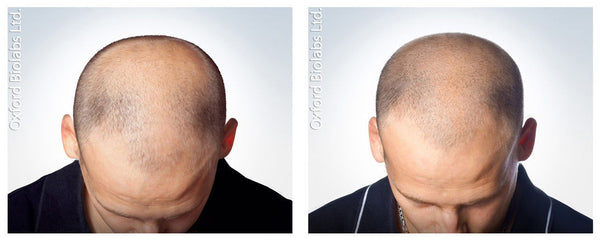
Case 2
Subject: Male, 32 years old
NW 4 - Reactivation of Dormant Hair Follicles
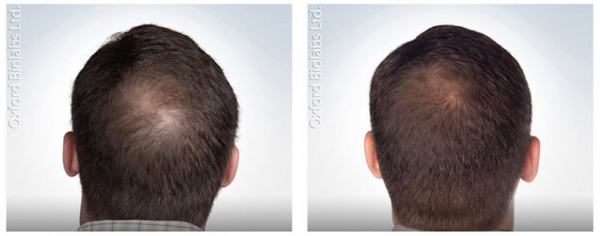
Case 3
Subject: Male, 36 years old
NW 3 – Temple and Frontal Area
Case 4
Subject: Male, 42 years old
NW 2 – Crown Area
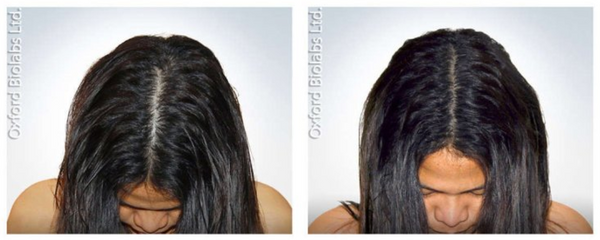
Case 5
Subject: Female, 23 years old
NW I-3 – Hair loss in woman with diffuse thinning
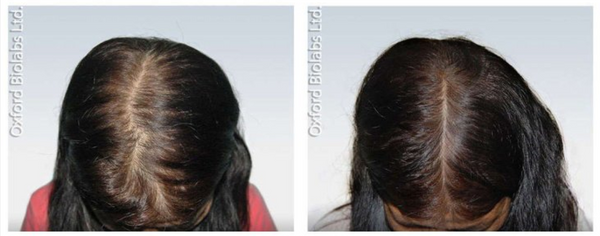
Case 6
Subject: Female, 45 years old
Norwood II-1 – Hair loss in woman after pregnancy and menopause
The testimonials represent the personal views and opinions of the person providing the testimonial. They do not necessarily represent the views or opinions of Oxford Biolabs. They cannot be relied upon to indicate that by using Oxford Biolabs products, the products will have the same effects as those described in the testimonials.
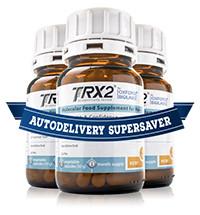
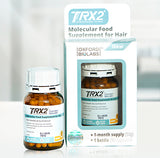
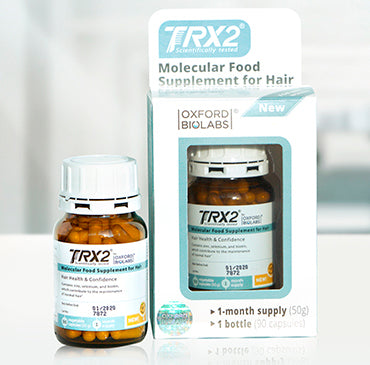
✓Prevention ✓Treatment ✓ Men ✓ Women For those experiencing hair loss or those looking to halt hair from thinning before it starts Since 2010 TRX2® has helped more than 20,000 men and women in over 110 countries enjoy their hair again Clinically tested in multiple studies Accredited by independent German Research Institute Dermatest® 100% naturally-based, risk & side-effect free, suitable for vegetarians Developed in Oxford, UK Manufactured in Germany
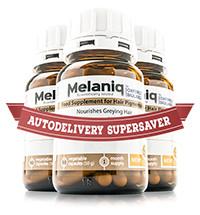
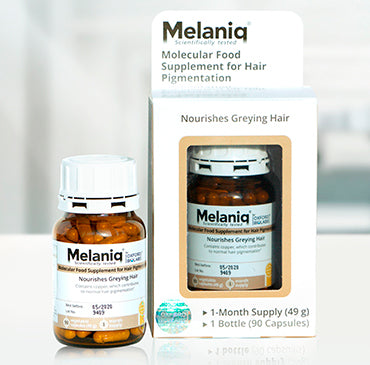
✓Prevention ✓Treatment ✓ Men ✓ Women For those experiencing premature greying, greying in general or those looking to halt greying before it starts Combines powerful active ingredients to help maintain normal hair pigmentation 100% naturally-based, risk & side-effect free, suitable for vegetarians Developed in Oxford, UK Manufactured in Germany
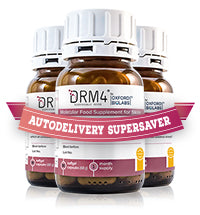
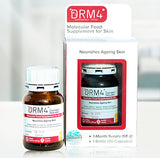
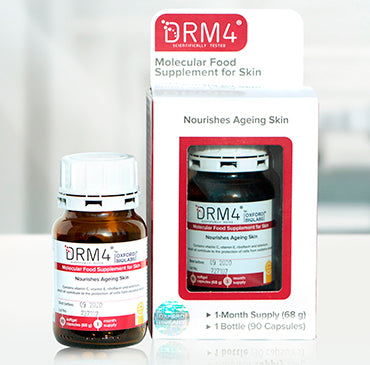
✓Prevention ✓Treatment ✓ Men ✓ Women For those experiencing premature skin ageing, ageing in general or those looking to halt skin from ageing before it starts Combines powerful active ingredients to protect cells from free radical damage and oxidative stress, such as UV radiation, toxins and pollution 100% naturally-based, risk & side-effect free Developed in Oxford, UK Manufactured in Germany
✓Prevention ✓Treatment ✓ Women 50+ For Women 50+ experiencing hair loss or those looking to halt hair from thinning before it starts Combines TRX2® Molecular Food Supplement for Hair and Post Menopause Food Supplement for Women 50+ Complements the original TRX2® formulation with micronutrients specifically beneficial for Women 50+ Contains powerful natural hormone-balancing nutrients 100% naturally-based, risk & side-effect free, suitable for vegetarians Developed in Oxford, UK. Manufactured in Germany
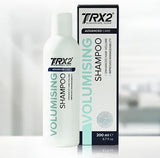
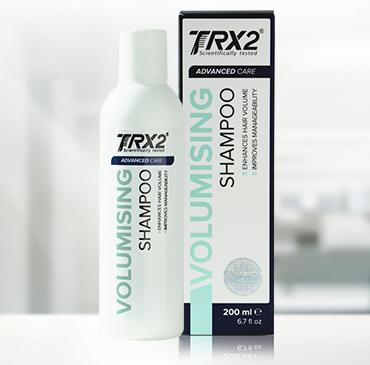
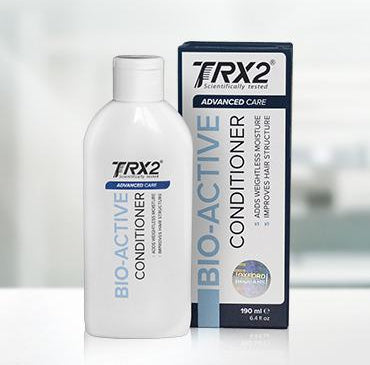
✓Instant Volume ✓Prevention ✓ Men ✓ Women Gives weightless, instant volume Contains proprietary hair-boosting complex Tricholastyl™ Contains natural volumisers Hydrolysed Soy and Rice Proteins Prevents follicle damage and nourishes hair Suitable for all skin and hair types Best combined with our other shampoos Naturally based, SLS/SLES-free, Silicone-free, Paraben-free Developed in Oxford, UK. Manufactured in Germany
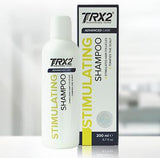
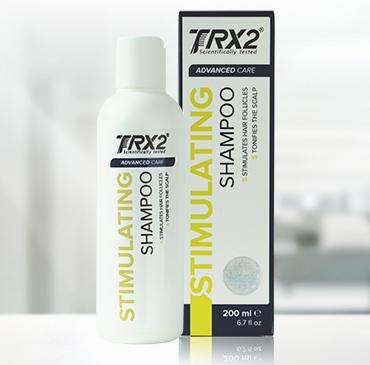
✓Hair Follicle Stimulation ✓Anti-Dandruff ✓Prevention ✓ Men ✓ Women Stimulates hair follicles Tonifies the scalp Gently removes oil and sebum buildup on the scalp Prevents dandruff and irritation Suitable for all skin and hair types Best combined with our other shampoos Naturally based, SLS/SLES-free, Silicone-free, Paraben-free Developed in Oxford, UK Manufactured in Germany
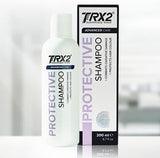
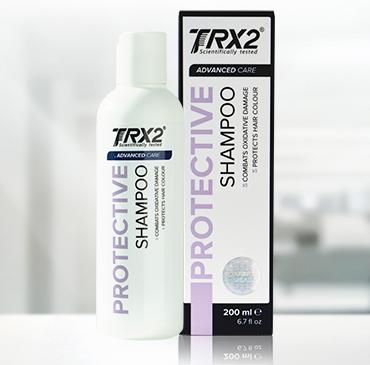
✓Hair Protection ✓Dyed hair ✓ Damaged hair ✓Hair Pigment Maintenance ✓Prevention ✓ Men ✓ Women Contains proprietary anti-oxidising complex Kerarice™ Protects hair fibres from oxidative damage Protects against solar radiation Suitable for all skin and hair types Naturally based, SLS/SLES-free, Silicone-free, Paraben-free Developed in Oxford, UK. Manufactured in Germany
✓Hair Follicle Stimulation ✓Instant Effect ✓Treatment ✓ Damaged hair ✓ Men ✓ Women Improves hair structure Stimulates hair follicles Enhances micro-circulation, energises, and strengthens hair Blend of natural oils and plant extracts Naturally based, SLS/SLES-free, Silicone-free, Paraben-free Developed in Oxford, UK Manufactured in Germany
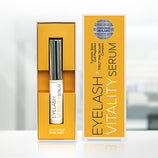
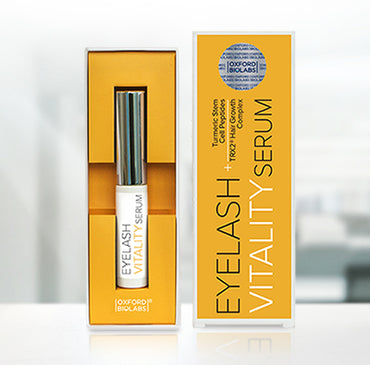
Prevents premature loss of lashes, protects against breakage and improves strength and flexibility Features Turmeric Stem Cell Peptides and the ground-breaking TRX2® Hair Growth Complex 96% of study subjects confirmed the beneficial effect on eyelash length, thickness and strength Tested under dermatological and ophthalmological supervision Naturally-based formulation, suitable for women and men Hypoallergenic, recommended for contact lens wearers Developed in Oxford, UK and manufactured in Germany
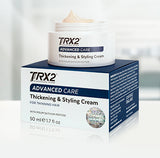
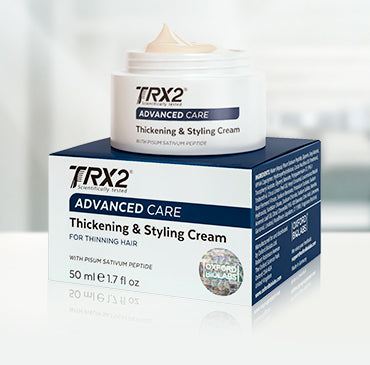
✓Instant Effect ✓Styling ✓Finishing ✓ Protection ✓ Men ✓ Women Cutting-edge styling product delivering instant volume Designed for daily usage Powerful moisturising effect Non-sticky, non-greasy with no residue Does not weigh hair down Visibly thicker, fuller hair after use Contains Pisum Sativum peptide - one of the most bio-available vegetable proteins on the market Developed in Oxford, UK. Manufactured in Germany
✓Prevention ✓Treatment ✓ Men ✓ Women TRX® Efficacy+ features a combination of TRX2® Capsules and TRX2® Lotion Targets hair follicles both from inside (TRX2® Capsules) and outside (TRX2® Lotion) Enhanced efficacy demonstrated by 2018 study and accredited by independent German Research Institute Dermatest® 100% naturally-based, risk & side-effect free, suitable for vegetarians Developed in Oxford, UK Manufactured in Germany
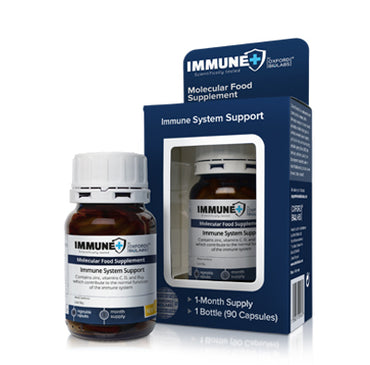
Designed to support the function of the immune system With ElderCraft® European black elderberry extract and yeast β-glucans Contains zinc, vitamins C, D and B12, which contribute to the normal functioning of the immune system A patent-pending and innovative formulation Developed by Oxford scientists using the latest knowledge in the immunity research 100% naturally-based, risk & side-effects free, suitable for vegans
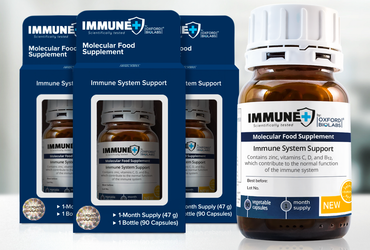
Designed to support the function of the immune system With ElderCraft® European black elderberry extract and yeast β-glucans Contains zinc, vitamins C, D and B12, which contribute to the normal functioning of the immune system A patent-pending and innovative formulation Developed by Oxford scientists using the latest knowledge in the immunity research 100% naturally-based, risk & side-effects free, suitable for vegans
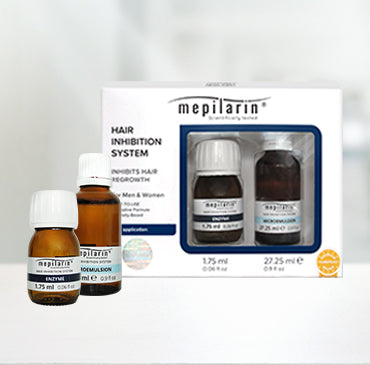
✓Permanent Hair Removal ✓Prevention ✓Skin Treatment ✓Men and Women * For men and women wishing to improve any method of epilation * Inhibits hair growth, soothes and beautifies epilated skin * Suitable for all skin and hair types * Tested under dermatological supervision * Naturally-based formulation * Developed in Oxford, UK, manufactured in Germany
✓Permanent Hair Removal ✓Prevention ✓Skin Treatment ✓Men and Women * For men and women wishing to improve any method of epilation * Inhibits hair growth, soothes and beautifies epilated skin * Suitable for all skin and hair types * Tested under dermatological supervision * Naturally-based formulation * Developed in Oxford, UK, manufactured in Germany
- Includes liabilityas per the conventions of the Universal Postal Union
- Shipment tracking included
- Shipping times can significantly vary between countries: usually 2-3 business days across the UK, 5-10 business days within the EU and USA, 10-20 business days for other countries.
Zone Germany
- Germany
Zone UK
- United Kingdom (excluding Gibraltar)
Zone America
- United States
- Canada
- Mexico
Zone 1
Belgium
Monaco
Bulgaria
Netherlands (except non-EU territories)
Denmark (except the Faroe Islands, Greenland)
Austria
Estonia
Poland
Finland (except the Aland islands)
Portugal
France (except overseas departments and territories)
Romania
Greece (except Mount Athos)
Sweden
Malta
Slovakia
Ireland
Slovenia
Italy (except Livigno and Campione d'Italia)
Spain
Latvia
Czech Republic
Lithuania
Hungary
Luxembourg
Cyprus
Zone 2
Andorra
Croatia
Belarus
Liechtenstein
Bosnia and Herzegovina
Macedonia
Georgia
Moldova
Gibraltar (UK)
Montenegro
Greenland (Denmark)
Norway
Iceland
Ukraine
Kazakhstan
San Marino
Turkey
Switzerland
Vatican City
Serbia
Zone 3
Egypt
Kuwait
Algeria
Lebanon
Bahrain
Libya
Iran
Morocco
Iraq
Oman
Israel
Saudi Arabia
Yemen
Syria
Jordan
Tunisia
Qatar
UAE
Singapore
New Zealand
Brazil
Australia
Chile
Philippines
China
South Korea
India
Malaysia
Zone 4
All countries and territories not covered by zones Germany, UK, America, 1, 2 or 3.